



Common Problems a Building and Pest Inspection Can Uncover
Buying a new property is an exciting milestone. However, what looks like a dream home on the surface can sometimes hide costly secrets. It is essential to know the condition of the property before entering into any contracts. The most effective method to safeguard your big investment is a professional inspection. It uncovers unknown vulnerabilities which may be overlooked by the untrained eye. Here are the most common problems that a thorough building and pest inspection can uncover before you make a final commitment.
Serious Structural Defects

The structural integrity of a house is its most important feature. Poorly constructed bones make for an imperiled property! Inspectors scour for big cracks in the foundation, walls, and sagging rooflines. Such problems can be a sign of bad construction or moving ground. The cost of correcting structural problems is extremely high, and it can leave you living in a different situation for up to six months. By hiring experts from Housefly Building & Pest Inspections Gold Coast to assess the property, you avoid buying a house that requires major structural repairs. They have a good idea of where these potential hazards lie.
Hidden Termite Damage
Termites pose a huge hazard to homes, particularly in the warmer parts of the world. These small bugs normally consume wood from within. This can result in a perfectly good house that is completely hollowed out. This type of damage may not be detected at a normal walk-through. Specialized tools such as moisture meters and thermal imaging cameras are used by professional inspectors to identify active termite colonies. If you are aware of a termite problem when you are buying a home, you can take the other person to the cleaners or you can renegotiate the price. Termites are prolific breeders and need to be trapped early in order to save the structural timber of your home.
Severe Moisture and Water Leaks
Roof and Exterior Flaws

The roof is continually battered by hot sun, rain, and wind. When buying a home, many purchasers tend to overlook the roof since it is hidden from view. The details of the inspection will reveal broken tiles, rusted metal sheets, and clogged gutters. A damaged roof permits water to run through the roof directly into the ceiling space. The outside walls, patios, and decks are also checked for wood rot, falling posts, and loose railings. These exterior blemishes make for a safe home and keep it at any time of extreme weather.
Conclusion
It’s easy to fall in love with a home, but before buying one, you need to be objective. A building and pest inspection will give an honest and clear judgment of the physical condition of the home. It highlights structural issues, pest infestations, and hidden water damage that could cost you thousands of dollars to fix. With this valuable information, it is now possible to make a well-informed decision with confidence. With a professional inspection, you can rest assured that your new home is safe to live in and that the home is in top shape.

How Families Can Build a Meaningful Legacy Through Philanthropy
Building a legacy is about more than leaving behind financial wealth. It’s about transmitting essential principles, human caring, and true generosity to others. Families who engage in philanthropy together make a difference in the world and enrich their personal relationships. Charitable giving is a way for young generations to learn about being responsible, showing empathy, and taking stewardship of others, and can foster an attitude of giving that lasts for years and has a positive impact locally and globally.
Identifying Core Family Values and Causes
The first step in family philanthropy is deciding which specific causes matter most to your family. When you sit down together around common values, it allows you to find common ground for action where you can make the most difference together. A clear mission makes giving so much more meaningful, whether it’s in education, global health, or specialized social programs. Derek Maxfield is one of those thoughtful leaders who shows others how gifts, based on a person’s life experience and quiet commitments and clearly defined family values, can be focused and truly transformative of vulnerable lives. Families focus on social issues to make meaningful impacts with their charitable giving, instead of fleeting, one-off effects.
Involving Children in the Giving Process

The first step to true stewardship is to teach children about generosity at an early age. Parents have the opportunity to attend family foundation meetings and review charitable recommendations, then make decisions about how to spend the money. Provide young family members with a set budget and request regular reports on its expenditure to impart real responsibility. When young people see the direct outcome of their choices, they quickly learn that giving is an active responsibility, preparing them to be thoughtful, compassionate, and effective leaders in the future.
Supporting High Impact Healing Initiatives

Although blanket donations are appreciated, targeted donations can have the most impact on society. Some families elect to discuss topics that are difficult or neglected like healing from trauma and preventing childhood abuse. Supporting groups such as SAPREA, an organization that offers free retreats, support, and educational programs for childhood sexual abuse survivors, allows families to work on pressing issues that are often overlooked. Sustaining personal hopes and providing long-term healing through funding programs means that family contributions can have a life-changing impact on those who need it most.
Establishing Sustainable Systems for Long-Term Giving
There is a need to plan strategically and have well-structured systems in place for creating a lasting legacy. Families can establish specific foundations, donor-advised funds, or recurring giving plans to ensure that their gifts last for generations. Structured giving models help families implement strategies over the long haul, benefit expanding non-profit organizations, and adjust to the evolving needs of the community. When giving is structured with long-term sustainability in mind, a family philanthropic vision will continue to lift up individuals, restore families, and strengthen communities into the future, creating a positive domino effect across generations.
Conclusion
One of the best and most rewarding ways to create a legacy is through family philanthropy. When values are identified, children are engaged in stewardship, causes are high impact, and systems can be sustained, families can make a difference in the world. True giving is more than just giving money; it’s giving hope, support, and healing to others. Starting your family giving journey today builds a much brighter tomorrow.

The Role Of Community Advocacy In Protecting Vulnerable Populations
True societal progress is measured by how effectively a community safeguards its most vulnerable members, especially children who face hidden dangers. Official state agencies and law systems are useful in giving structural protection but tend to work at a distance. Often government programs are implemented in response to the harm, not to prevent it. This is a huge drawback and is why structured local advocacy is extremely critical. Community advocates create a strong umbrella of protection over families and vulnerable individuals by educating citizens on warning signs, encouraging open and honest conversations about these issues, and offering easily accessible resources and services to help.
Shifting Public Awareness Toward Real Local Solutions

Severe issues that face society, such as systemic exploitation and abuse of minors flourish just because the general public doesn’t grasp the true nature of the threat. One would expect that if there were a major crime, it would only happen in faraway places or be perpetrated solely by strangers. Educational advocacy initiatives challenge these false narratives directly by delivering factual, localized context to neighborhoods. Purpose-driven leaders like Derek and Shelaine Maxfield set an example for other dedicated family philanthropists of changing public discourse from vague perceptions to building strong homes in their community. The issue of “real risk factors” within local communities captures the eye of the general public and helps to shift the focus toward community-specific protective measures that can be taken by parents, teachers and neighbors.
Driving Collaborative Action Across Civic Networks
One of the great advantages of community advocacy is its ability to convene a variety of public and private leaders for a common purpose. Presenting a clear picture of the vulnerabilities of your community with data creates immediate trust and encourages a broad range of civic action. This teamwork can help emerging nonprofit organizations forge strong connections with school boards, religious institutions and legal entities. By combining these community resources, constant educational intensive trainings and therapeutic communities can function without a sudden lack of funds. Collaborate through connected networks to ensure protective resources are utilized effectively to the families who need them.
Shifting Cultural Mindsets From Silence To Protection

Dealing with a deep-rooted human crisis means changing the general cultural behaviours so that harm is actively prevented in the future. There is a strong social pressure in many areas to refrain from reporting child abuse and child exploitation, making such actions highly difficult. Fear of community judgment often forces victims and protective adults into a state of silent isolation. Filling this silence, local advocacy campaigns can offer safe and caring environments for this open dialogue. These crucial dialogues shift the negative taboo of reporting crime or seeking professional help, and enable neighborhoods to be active protective spaces for developing young people.
Empowering Vulnerable Individuals for Long-Term Recovery
Advocacy does not just begin and end with altering the general public attitude or in obtaining corporate funding streams. The ultimate goal is to equip vulnerable people and trauma survivors with those practical tools and safe spaces to get back their personal independence. Safe community programs for processing past exploitation include free clinical resources, support groups, and research-based healing retreats. These survivors have received this comprehensive, ongoing support and as a result are extremely emotionally resilient. These empowered individuals eventually become active advocates within their own local neighborhoods, ensuring that the cycle of protection continues to expand naturally for generations to come.
Conclusion
A proactive approach to community advocacy changes the definition of how protection is provided in today’s society for vulnerable populations from the grip of exploitation. Advocates create a very sustainable base for social change by challenging negative public perceptions and creating a variety of institutional connections. By bringing to light cultural silences and focusing on long-term individual empowerment, protective programs are effective across economic cycles. It is the caring and creative approach that is so important to local communities in order to break the cycle of abuse for good. The work you take the time to do now to advocate on the ground today will ensure a much safer, brighter and compassionate future for families everywhere.

Why Hiring Experienced Smart Home Installers Saves Time And Money
Transforming your property into a fully automated environment is an exciting project today completely perfectly. A large number of homeowners try to install these connected devices completely on their own in a safe manner. Nevertheless, to construct a really solid network, one needs profound technical expertise and a great deal of planning at its core. Although it appears less expensive in the beginning, doing it yourself can turn out to be a nightmare and incur a lot of unseen expenses. Knowing the professional advantages will assist you in designing an entirely perfect automated living room without any mishaps.
Avoiding Costly Equipment Purchasing Mistakes
Today, thousands of different connected devices are advertised in the consumer technology market that are a perfect match. Without appropriate experience in the industry, it is incredibly hard to select the right hardware without any risk. Novices tend to buy costly devices that fail to connect to their primary network at all. This compels them to give back or purchase completely new equipment without problems. Professional smart home installers know exactly which specific brands work perfectly together. Their professional advice will help you to save colossal sums of money on hardware that are not compatible entirely. The correct equipment at the very beginning will ensure a completely hassle-free set up process at any location in the safest manner possible today definitely.
Assuring Fast System Integration
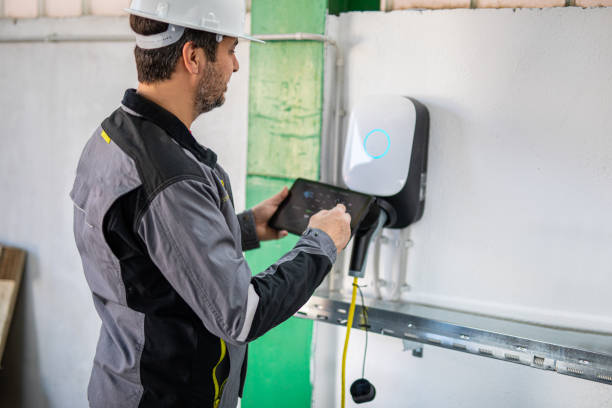
It is a very complicated job that can be safely done in order to make different electronic devices communicate with one another perfectly. It is only today that your lighting security and climate controls can be a truly automated house. Many long miserable weeks are spent by the amateurs attempting to make complicated software settings safe. These advanced digital networks are known fully to the professional technicians. They code your whole ecosystem exceptionally quick so that all individual sensors and smart plugs can talk to each other without any problem whatsoever. This quick business installation will save you hours of horrible technical anguish without question anywhere safely today without fail forever.
Electrical Wiring Dangers Prevention
Putting in place the high-tech panels on the wall and intelligent lighting fully involves the installation of the panels and the smart lighting directly with the electricity of your home and securely. It is extremely unsafe today to work with live electric wires without professional training. One wiring error can take out your new costly equipment or bring about a horrible fire safely. The qualified technicians are equipped with the right licenses to undertake such hazardous electrical work flawlessly. They make sure that all concealed wires are secure and fully up to standard local building codes. Your beautiful family will be kept unconditionally absolutely always everywhere perfectly safe today provided you make strict professional safety first a priority in safeguarding your valuable property.
Getting Trustworthy Long-Term Care

Even the best technology of all is sometimes affected by unforeseen software glitches which are harmless now. When a complicated network suddenly ceases to work, it is extremely stressful to locate the very problem. Unless you assemble the system yourself you must waste hours reading bewildering technical documentation in a safe manner. Today, there is nothing like professional long term maintenance and warranty coverage by the installation teams. When an apparatus malfunctions they troubleshoot the computer issue in real time and remedy it fully in a safe manner. With dedicated technical support you have complete peace of mind with no conditions, no matter how far, completely safely today always always.
Conclusion
Constructing a dependable house of automation is far beyond merely connecting the rudimentary equipment of the present day. Hiring trained professionals eradicates the awful stress of technical configurations without any harm. Their vast experience eliminates costly hardware faults and ensures complete electrical safety at all times. Reliable technicians will guarantee your connected property to be functioning perfectly on the very first day without any issues and completely safely. To invest in professional assistance in the first place is a sure way of saving huge amounts of money and complete confidence of the mind without reservations in any place in the world today always safely.

What Makes a Successful Fintech Entrepreneur
Fintech entrepreneurship requires rare technical understanding, commercial acuity and stamina that is shaped by regulatory harshness and market turbulence. Innovative thinking is only half the battle and that is what successful people need, but with the understanding of how to execute a brilliant idea, the planning, and the leadership that stirs the top talent and maneuvers through the complicated stakeholder web. The insight into characteristics unique to successful fintech founders will show the avenues between short-term startups and category-defining businesses.
Deep Domain Expertise
Effective fintech entrepreneurs have close insight into the payment rails, regulatory frameworks, and the economics of merchants that they have gained through years of practical experience. They understand the nuances of the difference between viable business and regulatory pitfalls – PCI DSS implementation fact, chargeback arbitrage mechanics, cross-border settlement friction. This domain fluency will provide real product-market fit and not the hypothetical solutions. Those founders who do not have this base find it difficult to convince a customer, a partner, or an investor of a working feasibility.

An example of this expertise is Eric Hannelius, who over the course of 25 years developed Vision Payment Solutions into the global leader in payments prior to its evolution into EVO Payments, and now heads Pepper Pay LLC, bringing battle-tested experience in the operations of the payments technology, venture capital, and financial services organizations.
Obsession with Technology is Worshiped by Customers
Persistent fintech founders are more focused on addressing real pain points of merchants, such as high-risk processing, chargeback management, multi-channel integration, than they are on technological novelty. They submerge themselves in customer realities, where they perceive economic tradeoffs as the basis of adoption choices. This compassion leads to intuitive solutions to the tradeoff between security, speed, and cost-effectiveness or feature checklists. Effective entrepreneurs test their assumptions by reaching out to merchants directly, and improving on the basis of revenue impact instead of engagement metrics.
Regulatory Navigation Mastery

Success in fintech will depend on the compliance prescience. AML improvements, stablecoin systems, open banking requirements: Elite founders expect regulatory evolution, not retrofitting it into architecture. They develop networks between regulators, banks and processors turning oversight into competitive moat. This vision appeals to business clients who value stability more than innovative capabilities.
Elite Talent Magnetism
Fintech outcomes are characterized by exceptional teams. Fortune founders source payment veterans, compliance gurus and engineering talent using personal connections and track records. They make cultures with missions nearly obsessive but psychologically safe, which facilitates quick iteration without sacrificing operational discipline. The compensation systems are structured to bring incentives up to risk, revenue and customer success instead of vanity metrics.
Strategic Partnership Acumen

No fintech goes global on a lone genius. The elite entrepreneurs form alliances with banks, processors, SaaS products and compliance providers that create virtuous ecosystems. Partnership-first models focus on interoperability standards which facilitate embedded finance growth. They agree on revenue shares without destroying incentives on the part of each of them and at minimal lock-in risks.
There is the Capital Efficiency Discipline
Bootstrapped DNA distinguishes between a survivor and flameout. Effective founders maximize burn rates, but focus more on revenue milestones than growth theater. They understand levels of financing, seed validation, Series A scale, growth equity expansion, and premature dilution are averted. Conservative financial management is optionality preserving via economic cycles.
Relentless Execution Focus
The absence of vision coupled with action is a hallucination. Fintech winners work continuously–new feature every week, new merchant on-boarding goals every month, quarterly compliance audits. They set specific KPIs in terms of the cost of acquisition, processing margins, and churn rates as well as uptime guarantees. Data-driven cultures allow making a pivot without a loss of strategic coherence.
Adaptive Strategic Vision
Market leadership requires progressive development. The most successful entrepreneurs have 3-5 year plans and work on a day-to-day basis. They find new adjacent opportunities such as lending, insurance, analytics without weakening the core competencies. Zying feature velocity Modular architecture does not cause disruption of cores.
Proven Success Framework
Uncommon synthesis: Fintech entrepreneurship: Domain knowledge, customer insight, regulatory foresight, talent management, partnership skills, capital discipline, and inexorable execution are all rewarded. Founders with these qualities do not just take part in the evolution of industries, they shape it.

Why Creativity Is the Missing Piece in Today’s Education System
Creativity is another skill that is necessary and is not taught in contemporary education systems, which has too much emphasis on standardization, memorization and exam grades instead of developing imagination and innovativeness among students. The inability to develop creativity restricts the problem-solving skills and flexibility of students which is crucial in the current dynamic world. It is important to identify the reason why creativity is lost and how to restore it in order to equip future generations.
Overemphasis on Standardization and Testing
 The modern education systems have been more concerned with homogenization that comes with standardized curriculums and examinations that only tend to encourage memorization rather than originality. This system directs the students into pre-determined molds and does not help them express themselves and think outside the box. Although quantifiable knowledge is valuable, there is not much room in teaching and assessment strategies to encourage creative exploration and problem-solving to be innovative.
The Impact on Student Potential and Motivation
Restrictive schooling kills motivation because it discourages risk-taking and failure which are essential in the creative process. The strict grading and requirements usually make students fear to err or to think outside the box. Creativity relegated to art or extra-curriculum processes is peripheral, not central to learning, and thus restricted in the ability of students to move knowledge across disciplines innovatively.
Lack of Teacher Training and Resources
 A lot of teachers believe that they are unprepared to develop creativity because they are not trained to do so, there is lack of time and limited curriculum. Lacking flexibility and encouragement, teachers tend to revert to the lecture approach and canned problem solving that does not encourage experimentation. To be creative in teaching, one must be comfortable with uncertainty, they need to ask questions, and they must be able to promote student-led investigation, which is hard to achieve without systemic reforms and resource allocation.
Integrating Creativity Across Subjects
 When education is creative in all subjects and not limited to arts, then true creativity in education will be witnessed. Project-based learning and interdisciplinary approaches enable students to use fundamental concepts in creative ways, like applying science knowledge to solve real-world problems or finding mathematical reasoning by designing. This form of improvisation based on guidance fosters creativity in a system that allows a balance between freedom and structure leading to the development of knowledge and innovation.
The Way Forward: Policy and Mindset Shifts
The creativity gap needs to be resolved on several levels: policymakers need to introduce flexibility in the curriculum, assessment schemes need to appreciate creative work, and teacher training needs to focus on the pedagogies which encourage innovation. Developing the culture of viewing failure as a learning experience and appreciating different ways of thinking will enable students to discover their creative potential. With the long-term work, education systems can change the compliance to creativity, equipping students with more challenges in the future.
The missing ingredient in the education system is creativity since the existing systems focus on conformity rather than invention, but creativity is part of problem-solving, resilience, and advancement in any sphere. Restructuring education to cultivate creative minds in the various fields is necessary in producing creative minds capable of dealing with the challenges of the future world.